
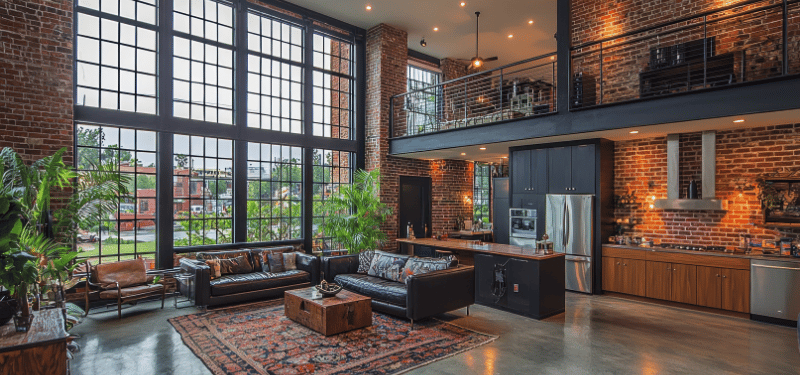
As the city of Boston (City) continues to confront housing shortages and shifting commercial real estate demand, City officials are increasingly embracing the idea of adapting, converting, and reusing existing commercial and industrial properties, and condominium development is just one component of this long-term growth strategy.
For the condominium industry, these housing initiatives represent a key opportunity for developers to find creative solutions to grapple with housing shortages and the changing commercial real estate market.
For developers and property managers, the City’s current approach represents more than a policy response to housing scarcity. It signals a broader transformation in how Boston intends to use land, revitalize neighborhoods, and reshape underperforming commercial assets.
Office-to-Residential Conversion Program
One key component of this strategy is the Office-to-Residential Conversion program that was introduced by Mayor Wu in 2023, and was recently extended until the end of December 2026. As this firm’s recent article examines, this program presents a unique opportunity for developers, many of whom have already submitted conversion proposals.
This initiative was designed to address two converging trends: the increase in office vacancy rates following the pandemic and the lack of housing inventory throughout the Boston area. Through tax incentives, expedited permitting, and zoning flexibility, the City has encouraged developers to convert obsolete office buildings into residential condominium units.
Overall, City officials report that the program has received conversion proposals for over 1.2 million square feet of office space. Several of these projects include condominium ownership opportunities, particularly in downtown and Financial District properties, places that are well-positioned to satisfy the increasing demand for nearby condominiums.
Public-Private Collaboration
Beyond office conversions, Boston is also demonstrating a willingness to incorporate condominium development into civic and neighborhood infrastructure projects.
By way of example, in Dorchester, local officials have recently agreed to a proposal concerning their local public library. The Uphams Corner Library project is one of Boston’s most innovative examples of combining civic infrastructure with homeownership opportunities. Planned for a City-owned site at 555–559 Columbia Road in Dorchester, the development will replace the existing library branch with a new two-story Boston Public Library facility, while adding 33 affordable condominium units above it. Developed by Civico Development and DREAM Collaborative, the project is designed to respect the historic fabric of the neighborhood by preserving the existing 1918 Dorchester Trust Company façade, while helping to build upon the Upham’s Corner Arts and Innovation District. The condominiums will range from studios to three-bedroom units, creating workforce homeownership opportunities in a neighborhood that has prioritized growth without displacement.
This concept reflects a trend in leveraging public land and community assets to create mixed-use projects that expand housing capacity without significantly modifying the neighborhood atmosphere. For condominium developers, the project demonstrates how public-private partnerships can unlock housing production in land-constrained environments.
Developing Dormant Industrial Properties
The City is also looking at developing underutilized, or otherwise dormant, land. For example, the Edison Power Plant redevelopment project in South Boston represents one of the largest adaptive reuse projects in the City. Dormant since 2006, developers have proposed a master vision for a mixed-use district that includes approximately 636 residential units, including condominiums, along with retail, hospitality, office, research and development space, and roughly six acres of public open space. Such a project exemplifies Boston’s goal of obtaining more housing for its citizens while also preserving Boston’s storied history.
Each of the above is an example of how the City of Boston is thinking outside the box to address and remedy the ongoing housing shortage within the City. For the condominium industry, these housing initiatives represent a key opportunity for developers to find creative solutions to grapple with housing shortages and the changing commercial real estate market. As Boston continues to grow, the City is positing condominiums as essential components of housing production, a pipeline to home ownership, and its long-term economic growth.

If you have any need for legal services related to this article, or any similar matter, you can email Scott at sofrias@mbgllc.com or any of our other attorneys at Moriarty Bielan & Gamache LLC at 781-817-4900 or info@mbgllc.com.
Scott G. Ofrias